

Media Trend Watching: Radio Right Now
Labels: cellphone, FMQB, Google, HD Radio, Internet, John Parikhal, Joint Communications, Jointblog, Karmazin, Media, Media Trend Watching, MySpace, PPM, Radio, Sirius, XM Joint Communications marks 30 years this month advising the radio industry through format programming, consulting, market research, marketing development and media strategy services.
The month of April also means it's time for John Parikhal's annual spring check-up as this week's featured FMQB cover story to discuss radio and the evolving mediaspace challenges radio faces in the immediate future.
Among the discussed topics:
> The proposed XM/Sirius merger -- including the financial and competitive implications as well as Mel Karmazin's catalyst role (puzzling; Stern probably helped save Sirius; Mel sees opportunities)
> The trend led by Clear Channel and other big groups toward privatization (more squeeze and bleed? And Clear Channel gets rewarded?)
> HD Radio (just another local spectrum)
> PPM ratings measurements (consistency of measurement will help)
> The cellphone (risky for electronic ratings measurement)
> Blink spots and other "Less is More" initiatives (applaud the experimentation; spare listener energy; don't invade the consumer)
> Radio's needed presence on the Internet and its mishandling of opportunities that went to MySpace instead (getting better...but still behind due to insufficient support staffing and streaming fee penalties)
> Google's new deal selling radio ads ("It's nonsense")
> The lucrative potential of selling and targeting the 30-59 year old demographic (so much money radio could grab)
> An updated look at radio's emerging trends (demographics!)
FMQB's chief editor Fred Deane gets it all started by saying:As the radio industry evolves at a rapid pace, critical decisions about the medium’s future become increasingly more urgent. Technology issues have enveloped the industry to such a challenging extent, that the call for radio leaders to be actionable has never resonated so loudly. John Parikhal has never met a challenge he didn’t like, he relishes the very concept. While Parikhal’s client list continues to remain firmly entrenched in radio, the macro version finds him involved with a variety of media and marketing companies. His latest foray with strategic Internet initiatives with some large clients has him thinking about the future 24/7. It’s spring and time for our annual check-up with one of our industry’s deep thinkers.
Thanks, Fred. All that and more...just click here for some great reading. Then come back and add your thoughts here on the Jointblog.
Additional reading: Thinking Through The Decision Making Process
posted by Unknown @ Friday, April 27, 2007,
,


Viewpoints on HD Radio: Where's The Buzz?
Labels: broadcasters, buzz, competition, Digital, HD Radio, high def, NewMedia, viewpoint As a new media consumer product, HD Radio remains mostly "unheard".
Research reports awareness to be "up"...but consumer buy-in is still low, waiting to catch fire.
The buzz -- so far -- is not exactly "high def".
Sure, the announcement earlier this month that Wal-mart will start selling HD Radio receivers is a big boost for potential viability. And the radio industry continues to push it forward upgrading their transmitters and launching new stations.
Last year's national promo campaign to raise consumer awareness was backed by most of the leading radio groups, including Clear Channel and CBS Radio, and continues on...but those promos are airing less often now. While retail distribution deals with Sharper Image (HD Radio was its February consumer catalog cover product), RadioShack, Crutchfield and BMW help make HD Radio more available for purchase, the marketplace reaction remains stiffly lukewarm, despite tech producer iBiquity's buzz-building efforts.
What is HD Radio?...and what are the problems? Is it the future of radio? Part of the problem is the perceived lack of need. Consumers have so many options for listening to music. HD Radio doesn't seem to fill a demand gap. Standard pre-installed radio in stereo systems seems sufficient to most radio users.
Another problem is radio's hesitation to offer these special HD radio partner channels for online streaming. If these "unique" channels are so great (commercial-free, no added agency/VO talent/copywriting royalty fees, etc.), why aren't they mass-streamed online and given prime exposure on the "mother" radio station's websites and other Internet locations?
Update 3/22 at noon: FCC approves new open HD Radio rules for streaming. The decision gives a green light to multicasting, so broadcasters no longer need to apply for experimental authority to multicast, including for HD Radio. All the commissioners called the digital radio vote historic -- let's hope it creates historic good results.
While HD radio offers better audio quality than conventional/analog AM/FM, the radio industry's embrace of this new tech option is perceived as partial, not full. There may be more than 1200 HD radio stations now...but who is really listening?
The technology for HD Radio was available back in the mid-90s when the U.S. standard was accepted. But the radio industry waited...until after mp3s, internet downloading and streaming, the iPod and satellite radio. Consumers weren't able to hear HD Radio programming or buy the receivers until just a few years ago.
The fact radio is doing "something" HD or digital is better than not at all; the problem is, "something" is not good enough. After a major 15-month push, HD Radio remains sub-optimal in terms of consumer response..png) Heck, according to Technorati, even the media and tech gadget blogs rarely write about HD Radio (about 60-to-75 post references a day, on average; satellite radio, in comparison, gets 10 times that amount daily) -- and when they do, support is mixed. Not a good buzz-building indicator.
Heck, according to Technorati, even the media and tech gadget blogs rarely write about HD Radio (about 60-to-75 post references a day, on average; satellite radio, in comparison, gets 10 times that amount daily) -- and when they do, support is mixed. Not a good buzz-building indicator.
Can HD Radio still succeed? Doubtful but somewhat possible...if it tolerates the necessary long-term investment waging a long uphill battle against too many opponents.
Does radio need to be digital? Absolutely...but is HD the answer? Or is it making HD available on the iPod? Right now, the effort consumers have to make to hear HD Radio remains difficult and/or expensive, rendering it unnecessary for most radio users.
What are the current viewpoints of experts watching the HD Radio trends? A selection:Jerry Del Colliano from his InsideMusicMedia blog: "Can any consulting adult really believe HD is the answer when there is next to no consumer interest in it?"
So what are your thoughts?
Tech and digital media consultant David H. Deans: "HD Radio can't save broadcaster problems."
Ted Schadler, an analyst with Forrester Research, as reported by BusinessWeek: "The problem for the broadcasters, who continue to see their audience become fragmented and who struggle to boost ad revenues, is that HD radio is not a new offering. It's a defensive move...It's better radio, but it's not a whole lot better radio."
posted by Unknown @ Wednesday, March 21, 2007,
,
Stern, Ratings, CES, MacWorld Expo: Not Just Another Day in Mediaville
Labels: Apple, CBS Radio, CES, HD Radio, innovation, Jointblog, MacWorld, Media, Media Trend Watching, Net Neutrality, Radio, Ratings, Satellite, Sirius, Stern, Steve Jobs January 9th turned out to be quite the media day.
Howard Stern started off the day celebrating one year satcasting his radio show on Sirius radio, complete with omelet bar and plenty of bagels for Artie Lange.
Stern's one-year impact? Certainly a major contributer to Sirius subscriber gains of more than 2.8 million new listeners. Which explains Stern's huge stock reward announced today worth an estimated $83 million.
Stern's also much happier censoring himself instead of being verbally shackled by the FCC, allowing him to deliver radio that is "free-form, free-flowing, one big party." Stern's satellite success has brought Sirius plenty of new sat radio listeners and, according to Mel Karmazin, $300 million more than Wall Street originally forecast for Stern's first year. But, Newsday asks, at what cost?
Whatever. The King of All Media is better than ever.
And CBS Radio was left reeling, as explained by the NY Daily News. Today's Fall ratings book results began rolling out today; the Stern-escape effect still shows.
Meanwhile, looks like HD Radio may be benefiting due to Stern's move to satellite radio. According to Forbes.com, the major disruption in morning radio habits once Stern left forced listeners to consider new options. Some went to Sirius or XM or just another terrestrial radio station. But, now that prices have dropped and more formats have been made available, some radio listeners are beginning to check out HD Radio, including at this week's Consumer Electronics Show in Las Vegas. Will HD Radio (now with 1,200 stations available and increasing) eventually challenge satellite radio's position?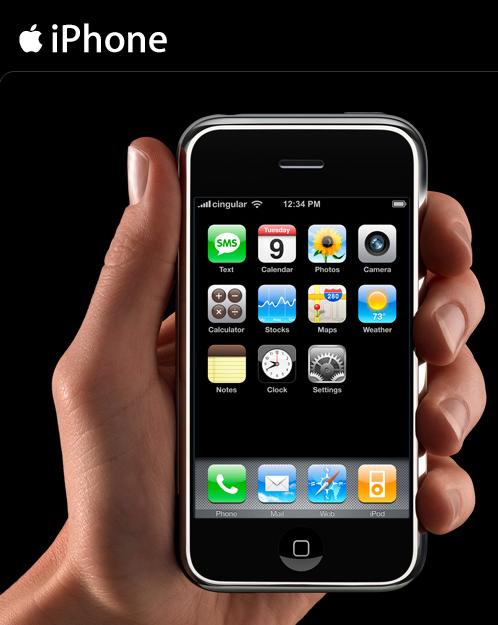 Speaking of new electronics...
The annual MacWorld Expo trumped the CES getting all news outlets talking while also giving Steven Jobs some TV time on ABC's World News with Charlie Gibson. ABC News got two-minutes alone using the brand new Apple iPhone, which won't be released for sale until June.
That hasn't stopped iPhone envy, impressing fans with the sleek design which promises to "reinvent the phone". Many are thrilled with this latest example showing the genius of Apple design.
Although Cisco apparently isn't too happy.
Jobs countered previous speculation suggesting iTunes sales were slowing down. In fact, he says, iTunes has now sold more than two billion songs, 50 million television episodes and over 1.3 million feature-length films have been purchased and downloaded from the iTunes Store, making it the world's most popular online digital media store.
And now, AppleTV (or iTV) will be coming to a living room near you, too.
Speaking of mobile phones, Yahoo! inked new Mobile 2.0 distribution deals with a variety of wireless providers for its newly enhanced mobile product Yahoo Go for Mobile 2.0, as well as a newly launched mobile search platform, dubbed oneSearch.
Lastly, fresh-back-in-session Congress led by the Democrats formerly introduced a new Net Neutrality bill, which is good news for all media trend watchers.
Lots of media news with potential long-term impact. Wonder what the new media landscape will look like one year from now?
posted by Unknown @ Tuesday, January 09, 2007,
,